Academics
Our Curriculum
Hartford College is Australia’s first Catholic high school in the liberal arts tradition. It has an engaging and rich curriculum, designed to impart well-rounded knowledge across multiple disciplines and develop critical and independent thinking skills.
The liberal arts tradition begins in the ancient world and has been carried forward through the centuries. Students encounter enduring works—from Homer, Plato, and Aristotle to Augustine, Aquinas, Shakespeare, Milton, and writers of the modern age—so that they learn to read closely, think clearly, and speak and write with precision.
The Humanities Programme
Hartford’s approach to learning is focussed on integration - exploring how different subjects relate and intertwine with others.
We teach lessons that help students make connections across curricula, demonstrating that learning is never isolated, but symbiotic.

-
Hartford’s humanities program introduces students to the stories, ideas, and institutions that have shaped our civilisation and our common life. Through a carefully chosen sequence of history, literature, and philosophy, students study the ancient and modern worlds, Australia’s national story, and enduring questions about justice, virtue, freedom, and responsibility.
-
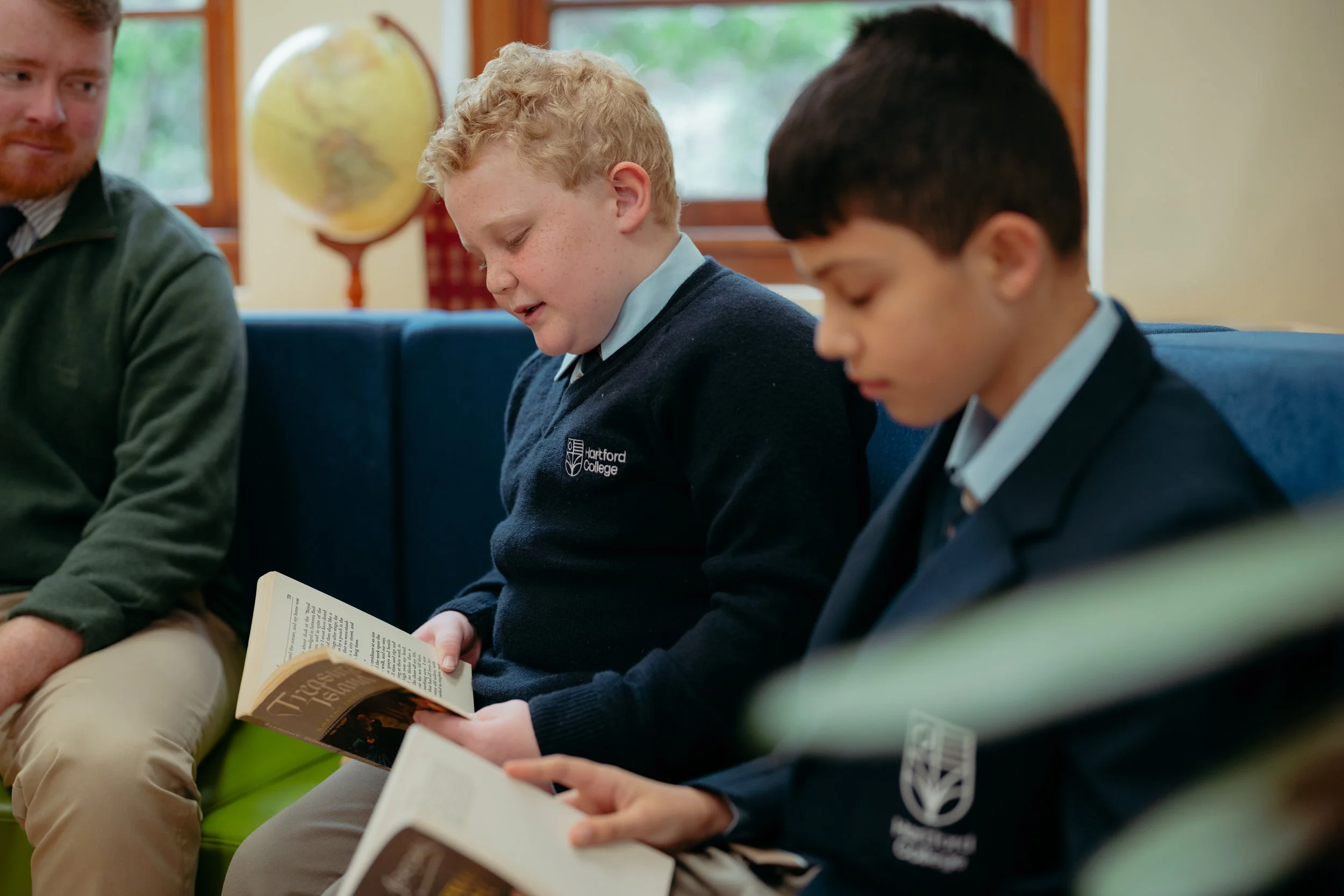
Our study of literature is integrated with history and the wider humanities. Students begin with foundational stories from the ancient world (such as Homeric epic), then move through classic and modern works that help them imagine other times and places—from early English children’s literature and medieval retellings to Shakespeare and the great novelists of the modern age. In the senior years, students read widely, including Australian literature. Reading and writing go hand in hand: across subjects, students learn to write with clarity and coherence, building toward mastery of the essay.
-
The history classes at Hartford College form the backbone of our curriculum. The four-year history sequence covers ancient history through the Greek and Roman civilizations, early Church history, the Middle Ages, the Renaissance, and the Reformation and Counter-reformation. In senior year, students study the modern era, including the American and French Revolutions, the Industrial Revolution, the Communist Revolution, and the Sexual Revolution. Each history course is tailored to provide a colorful backdrop for literature, art, and science classes.
-
Philosophy, “the love of wisdom,” exercises the brain while it elevates the soul. The ability to understand abstract concepts leads to clear and systematic thinking in all things. We use philosophy to connect the humanities, but also to show its obvious connection to logic and mathematics. We study the development of philosophy from its classical roots focusing on Plato and Aristotle, its dramatic encounter with the early Church, its christening by St. Thomas Aquinas, and its deterioration in the modern era.
-
Theology, “the study of God,” is the context by which all other texts are studied. The principal theological texts studied are the Bible and the Catechism of the Catholic Church. We also read selections from the Church Fathers, Documents of the Church Councils, and Papal Encyclicals.
-
Latin is a cornerstone of Hartford’s liberal arts program. Studied from Years 7–10, it trains students in careful attention to language—grammar, logic, and precision—while opening a window onto the literature, history, and ideas of the classical world. Through translation and close reading, students strengthen English vocabulary and expression and gain a deeper understanding of the foundations of Western civilisation.
-
Students also study a modern language, choosing between French and Spanish. Where students arrive with prior language study, we aim to place each student in the most appropriate level from the outset, regardless of year group.
The Maths & Science Programme
Maths and science are intimately connected; the logic of maths is seen in philosophy and God’s handiwork is seen in the sciences.
-
Mathematics is the art of measuring. Science is the study of what can be measured. While math is woven together with the sciences, it is also connected to the humanities. It teaches logic, which is a basic philosophical principle. It teaches balance, which is a basic aesthetic principle.
-
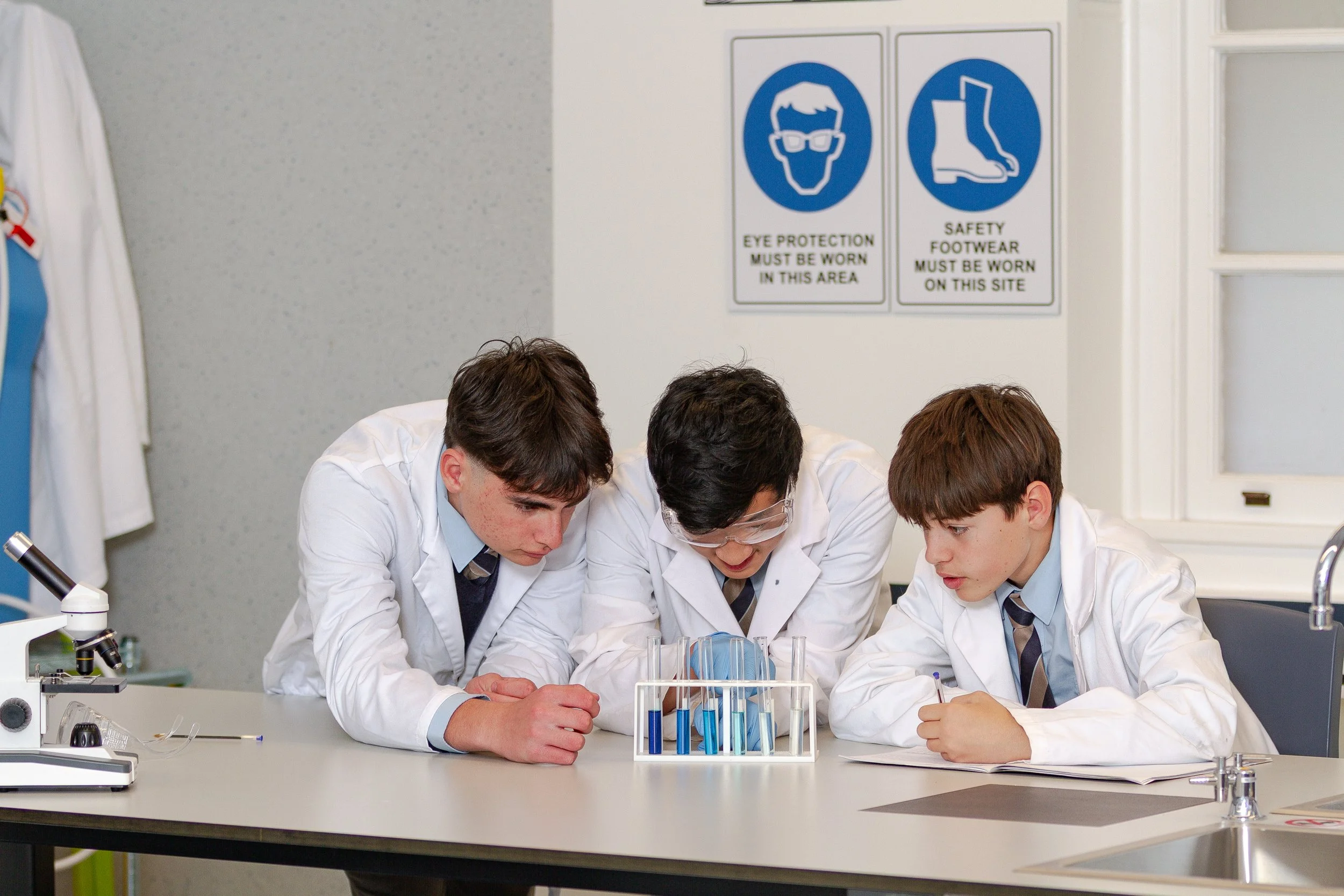
Science is the study of the physical world, that is, of God’s creation. None of these subjects can be approached without a sense of wonder. It is fitting, therefore, to begin by looking up at the heavens, at the lights in the sky: Astronomy. Then we take a look at the world God created (Geology), the creatures he created (Biology), and the intricate substances of which all things are made (Chemistry). We end by gaining an understanding of the nature and properties of matter and energy (Physics).
The Fine Arts
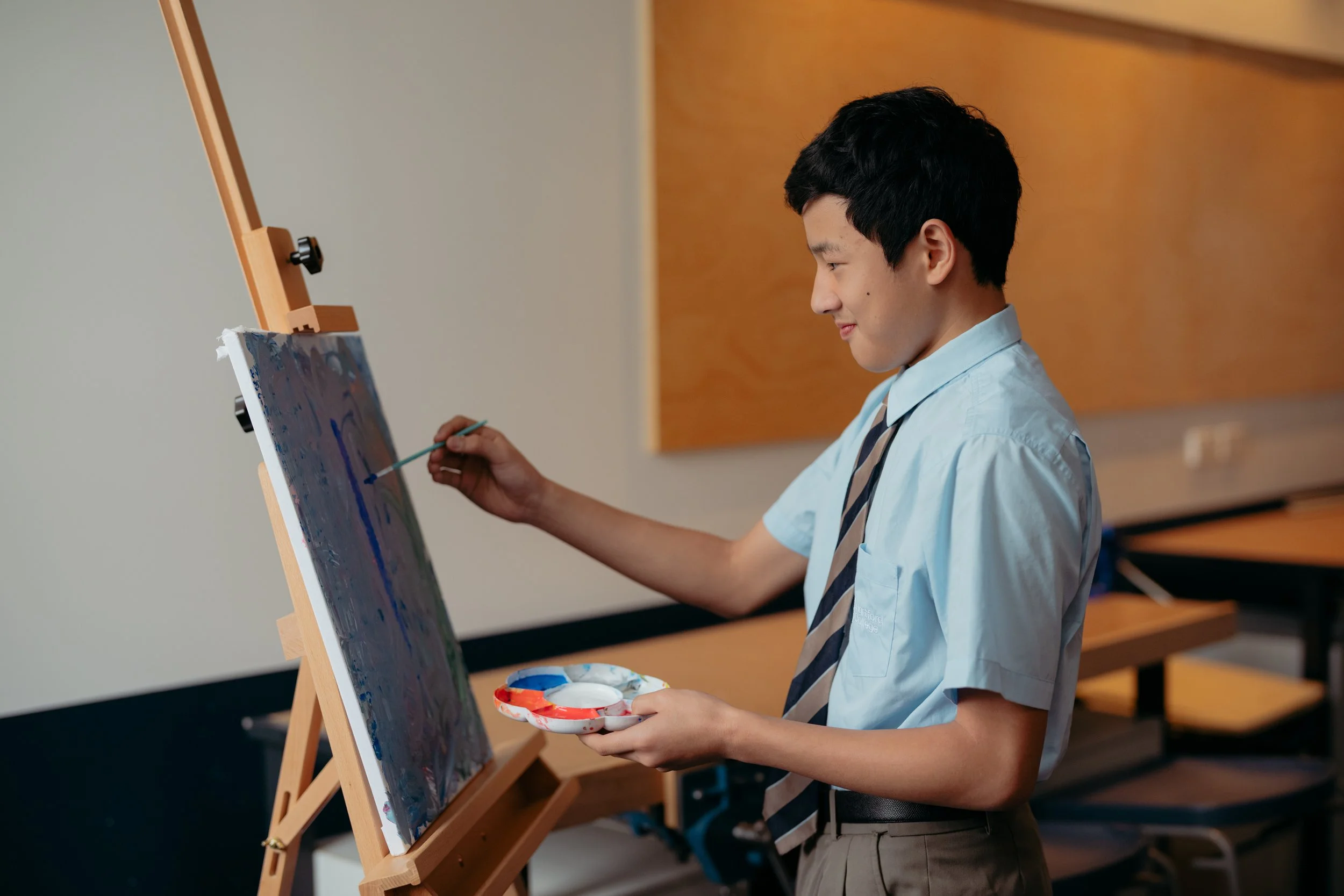
Equal emphasis is given to the arts, so that every student learns to draw and paint, sing in the choir, act on the stage, give speeches, and engage in debate.
-
Music appeals to the ear and the mind, the emotions and the intellect, the senses and the spirit. Hartford College students are exposed to a wide variety of music that they perform chorally several times a year. An education at Hartford includes music theory, performance, ear training, note reading, and musical analysis. Music history is taught according to the grade level with an emphasis on music development within the Church, and corresponds to the historical period in which the students are immersed. Students perform in grade-level choirs and in the all-school choir at choir concerts and Masses.
-
A complete education must include the development of the creative nature and must provide students with the tools and the technique with which to express their ideas, their feelings and their love. It must also include the analytical skills with which to judge a work of art and exposure to great art. Finally, the mechanical skills and the aesthetic aptitude must be put into the proper context of eternal Truth. A good artist is a complete thinker and vice versa. The influence of the arts in today’s society cannot be overstated, and this is why art is mandatory at Hartford College all eight years.
-
Years 7-10: Ancient Art History | Drawing and Calligraphy, Late Roman and Early European Art History | Pastels and Colors, Late Gothic, Renaissance, and Baroque Art History | Oils, Classical, Romantic, and Modern Art History | Oils