Joseph Pearce: Australian Heroes of Faith
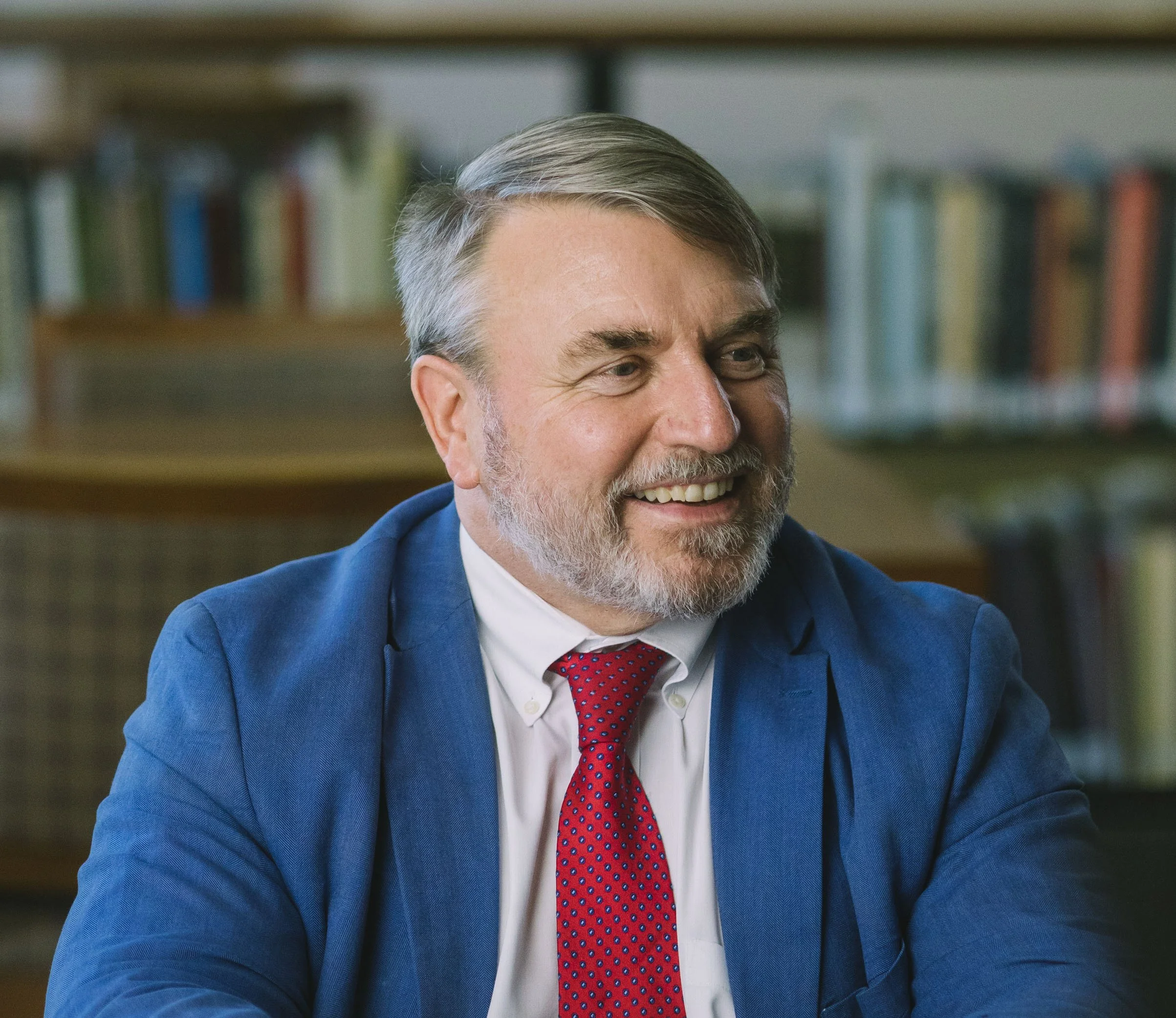
Joseph Pearce visited Hartford College to speak to our families.
He shares several Australian Heroes of Faith in the article below.
Under the Southern Cross
Weighting the blessings and consequences of immigration on a host nation and those who seek to enter it.
Long after European adventurers had first sailed into the mystic West to discover the New World of the Americas, other intrepid European explorers sailed south to discover the newer world of Australia. The Dutch were the first to arrive, in 1606. But it wasn’t until 1770 that Captain James Cook claimed this new land for Great Britain. Ever since, Australia’s remote location, out on a far latitudinal limb, under the Southern Cross and other strange constellations, has separated it from the mainstream of European culture. It is, therefore, fitting that we should acknowledge those faithful and pioneering Catholics who served the Church under the Southern Cross.
Perhaps the most eminent Australian hero of the Faith is John Plunkett (1802-1869), Attorney-General of New South Wales and a member of its Legislative Assembly. Born in County Roscommon in Ireland, he studied law at Trinity College Dublin and practiced as a barrister with great distinction in his native Ireland before accepting the appointment to serve in the antipodean colonies.
In June 1832, the month in which he turned 30 years old, Plunkett arrived in Sydney from Cork aboard the convict ship Southworth, accompanied by his wife and by his friend Fr. John McEnroe, whom he appointed as official chaplain to the Catholics of Australia. At the time of his arrival, most Catholics in the colony were convicts, but this was about to change. By 1840, convict transportation had ceased, and assisted “free” immigration had begun in earnest. By the 1850s, only 3 percent of the population were convicts.
Plunkett was a controversial figure, often finding himself at loggerheads with the Catholic hierarchy, not least for his efforts to promote a national education system along non-denominational lines. In this respect, he might be considered a villain, rather than a hero, who undermined the principle of subsidiarity in his favouring of a state education system over the religious liberty of the Church. It is not for this that he should be celebrated but for the courage with which he defended the legal rights of the aborigines.
He is best known for the prosecution of the colonists who brutally murdered at least 28 aborigines in the Myall Creek Massacre of 1838. Plunkett’s successful prosecution of the case resulted in the conviction of seven of the defendants, six of whom were white Europeans and the other a black African, who were subsequently hanged for their crimes. It is, therefore, as a defender of the dignity of every human person, irrespective of race, that John Plunkett should be remembered and celebrated.
Caroline Chisholm (1808-1877) was a Catholic convert who worked tirelessly to help homeless women and other impoverished immigrants. Born in England, she and her husband arrived in Australia in 1838, with their two sons, settling in Windsor, near Sydney. She became aware of the difficult conditions which many young women faced when arriving in Sydney as immigrants. Many had no friends or family, nor jobs or money, and they were forced into prostitution to survive.
She established women’s shelters in Sydney and beyond to save these penurious women from the sordid realities of life on the streets. During the seven years that she was in Australia, prior to her return to England, she placed over 11,000 people in homes and jobs.
In 1854, Chisholm collected her son William from Rome, where he had been studying for the priesthood. During an audience with Pope Pius IX at the Vatican, the holy pontiff presented her with a Papal Medal and with the gift of a bust of herself. In the same year, she and her family returned to Australia where she continued her tireless work for impoverished immigrant families.
At the end of 1859 and the beginning of 1860, she gave a series of political lectures in which she called for land to be granted to immigrant families so that they could establish small farms. With a vision which foreshadowed Pope Leo XIII’s encyclical Rerum Novarum, published more than 30 years later, she argued that the granting of land would provide economic security for new settlers and greater social stability and cohesion for the colony itself.
Returning once again to England in 1866, Chisholm died in London eleven years later, predeceasing her husband by only a few months. They were survived by five of their eight children.
The heroic examples of John Plunkett and Caroline Chisholm, an Irishman and an Englishwoman, both of whom were emigrants from their own homelands and immigrants to Australia, offers a timeless and timely testimony to the problems associated with immigration in our times as in theirs.
On the one hand, the plight of the aborigines, the indigenous people of Australia, whose cultural traditions were uprooted by the impact of immigration, should offer pause for cautionary thought for those who fail to see the consequences of immigration on native populations. On the other hand, the plight of poor European immigrants to Australia should serve to remind us of the need to respect the dignity of all human persons, native-born citizens and immigrants alike.
John Plunkett defended the dignity of the natives; Caroline Chisholm defended the dignity of vulnerable immigrants. In doing so, they offer a living witness to the Lord’s commandment that we love our neighbours.
Four More Australian Heroes of the Faith
A look at four more unsung heroes from the Australian continent, including the great Frank Sheed.
In the previous essay in this series, we focused on two heroic Australian Catholics who witnessed to the Faith in their defence of the dignity of the human person. In this chapter, we will celebrate four other Australians whose heroism was made manifest in multifarious ways. Each is radically different in the gifts they received from the Lord and the gift of themselves which they offered to others. What they have in common, however, and as we shall see, is the self-sacrificial love of God and neighbour which animated their very different lives and apostolates.
Eileen O’Connor (1892–1921) achieved great things during her short life, in spite of suffering from a severe disability—a curvature of the spine which is now known to have been spinal tuberculosis and transverse myelitis (severe inflammation of the spinal cord). She was often in excruciating pain and claimed to have received a Marian visitation in which the Blessed Virgin encouraged her to offer her own suffering for the good of others. Along with Fr Ted McGrath, she founded a religious order, the Society of Our Lady’s Nurses for the Poor, popularly known as the Brown Nurses.
Confined to a wheelchair and never able to walk, she was only 3 feet, 9 inches tall and lived for only 29 years. Yet such was her sanctity and achievement that the Archbishop of Sydney, Anthony Fisher, published his edict to petition the cause for her beatification in October 2019. Four months later, in February 2020, the Mass to officially open the cause for beatification was held at St Mary’s Cathedral in Sydney.
Mary Glowrey (1887–1957) is another Australian religious sister whose cause for beatification is under way. A member of the Congregation of Jesus Mary Joseph, whose religious name was Mary of the Sacred Heart, she is thought to be the first religious sister to practise as a doctor.
Having graduated in 1919 as a Doctor of Medicine in obstetrics, gynaecology, and ophthalmology, Glowrey discerned the religious vocation. Then, inspired by the life of Agnes McLaren, a pioneering Scottish missionary doctor who had given medical assistance to women in India, she felt called to follow in McLaren’s footsteps and to serve as a medical missionary doctor there. Leaving Melbourne in early 1920, she never returned to Australia. For the next 25 years, she provided medical care for hundreds of thousands of patients, mostly marginalised women. In addition, she trained local women to dispense medicine and to become midwives and nurses.
In 1943, Glowrey founded the Catholic Hospitals’ Association, now known as the Catholic Health Association of India, which currently has more than 3,500 members overseeing the care of over 21 million patients annually. She died in Bangalore from cancer in May 1957, a few weeks short of her 70th birthday. She was declared a Servant of God in 2013 as part of the cause for her beatification.
Fr Austin Woodbury (1899–1979) is an Australian whose heroism was of an entirely different sort to that of Eileen O’Connor and Mary Glowrey. He was the sixth of 11 children of a devout Catholic family. Four of his sisters joined religious orders. Following a religious vocation himself, Woodbury entered the Society of Mary, popularly known as the Marist Fathers, in 1918. A gifted scholar, he studied in Rome at the Pontifical University of St Thomas Aquinas, popularly known as the Angelicum, under the famous and influential Dominican theologian Réginald Garrigou-Lagrange.
In 1945, Fr Woodbury founded the Aquinas Academy in Sydney, a school of philosophy and theology open to the laity, which, as the name suggests, emphasised the teachings of St Thomas Aquinas. From 1945 to 1974, Fr Woodbury taught courses in both philosophy and theology, teaching around 600 students each year. His legacy as a popular promoter of Thomistic theology and philosophy resonates to this day. New Catholic colleges, such as Campion College and Hartford College in Sydney, and St John Henry Newman College in Brisbane, are following in Fr Woodbury’s footsteps.
The fourth and final Australian hero of Christendom to be singled out for praise is Frank Sheed (1897–1981). As the co-founder of the Sheed and Ward publishing house, he played a significant role in the Catholic cultural revival in the Anglophone world in the middle decades of the last century. As perhaps the most prominent and important Catholic publisher of the time, Sheed and Ward published books by many of the Catholic eminentissimi and illustrissimi, including Karl Adam, Hilaire Belloc, G.K. Chesterton, Christopher Dawson, Ronald Knox, and Evelyn Waugh.
Aside from his importance as a publisher, Frank Sheed was a formidable writer and apologist in his own right. His works include Communism and Man (1938), Theology and Sanity (1946), Society and Sanity (1953), and Theology for Beginners (1957). His autobiography, The Church and I (1974), is one of the most important historical accounts of the Catholic revival of which Sheed was himself such an important and integral part.
Eileen O’Connor, Mary Glowrey, Austin Woodbury, and Frank Sheed would seem to have very little in common. O’Connor and Woodbury stayed in Australia. One served the bodily needs of the sick; the other nourished the life of the mind. Glowrey and Sheed departed their native land to pursue vocations in far-flung corners of the world. One served the bodily needs of the poor and sick in India; the other nourished the life of the mind throughout the whole English-speaking world through the publishing of books. They couldn’t have been more different, yet they each laid down their lives for the love of God and neighbour, witnessing to the truths of the Gospel and the teachings of the Church. Each had unique gifts, but each offered those gifts self-sacrificially. Each gave back to the Giver of the gifts the fruits of the gifts given. It is this that makes them heroes of Christendom.